



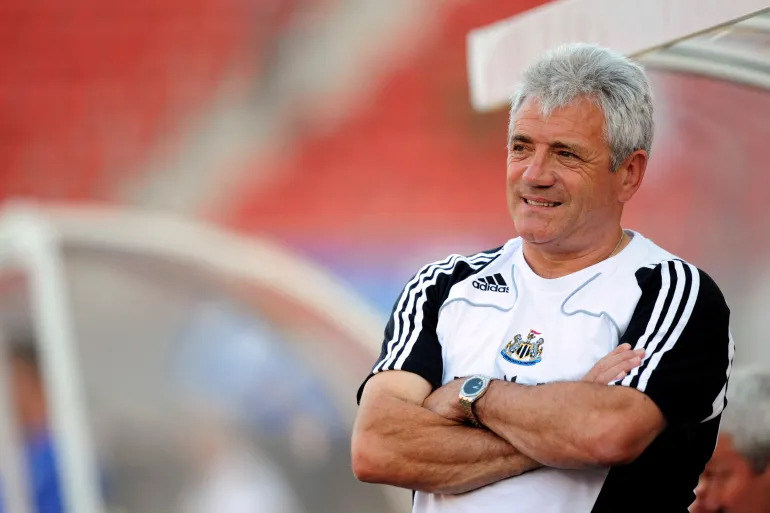
Kevin Keegan, one of England’s greatest footballers and one of the game’s most charismatic managers, has died at the age of 75, his family announced on Monday. A two-time Ballon d’Or winner, Keegan had been battling stage-four cancer, a diagnosis his family first revealed in January.
In a statement, his family said: “It is with immense sadness that we announce that Kevin Keegan has passed away at the age of 75. The former England player and manager had been battling cancer and was surrounded by his wife and daughters in his final moments. Kevin, a double Ballon d’Or winner, was a much-loved husband, father and grandfather.” The family thanked his medical team and requested privacy at what they called a hugely difficult time.
From Scunthorpe Trialist to Liverpool Great
Born Joseph Kevin Keegan on 14 February 1951 in Armthorpe, Doncaster, he began his career at Scunthorpe United before being signed by Liverpool’s Bill Shankly in 1971. At Anfield he became a star of the great Liverpool side of the 1970s, winning the First Division title three times, the FA Cup, the UEFA Cup twice, and the 1977 European Cup, forming a celebrated partnership with John Toshack.
In 1977 he moved to German club Hamburger SV, where he reached the peak of his individual powers, winning back-to-back Ballon d’Or awards in 1978 and 1979 as European Footballer of the Year and leading the club to a Bundesliga title. He later returned to England with Southampton before joining Newcastle United in 1982, where he helped win promotion to the top flight and became an idol on Tyneside, retiring as a player in 1984.
England Captain and Manager
Keegan won 63 caps for England, scoring 21 goals, and captained his country on numerous occasions, featuring at the 1982 World Cup. After eight years out of the game, he returned to management with Newcastle United in 1992, guiding the club from the second tier to the Premier League and overseeing the memorable, attacking “Entertainers” side that came agonisingly close to the title in the 1995-96 season, ultimately finishing runners-up to Manchester United.
After leaving St James’ Park in January 1997 and a brief spell at Fulham, Keegan was appointed England manager in 1999. He resigned in October 2000 following a defeat to Germany in the final match at the old Wembley Stadium before its reconstruction. He later managed Manchester City, guiding the club to promotion in 2001-02, before a second, short-lived return to Newcastle in 2008.
Tributes Pour In
Tributes flowed from across the football world. Newcastle United described Keegan as “one of the most iconic, influential and deeply loved figures in our club’s history” and “the beating heart of Newcastle for generations of supporters,” adding that as a manager “he ignited our city” and “gave supporters hope and pride.” Manchester City said everyone at the club was “devastated” to lose their “transformative” former manager, recalling that the 2001-02 promotion campaign “will never be forgotten.”
Across the game, figures who played under and alongside him remembered a charismatic, uplifting man-manager whose passion for attacking football and connection with supporters defined an era. Known affectionately throughout his career as “King Kev,” Keegan remained one of the most beloved and recognisable figures in English football long after he stepped away from the touchline.
Kevin Keegan is survived by his wife, Jean, and their two daughters.