



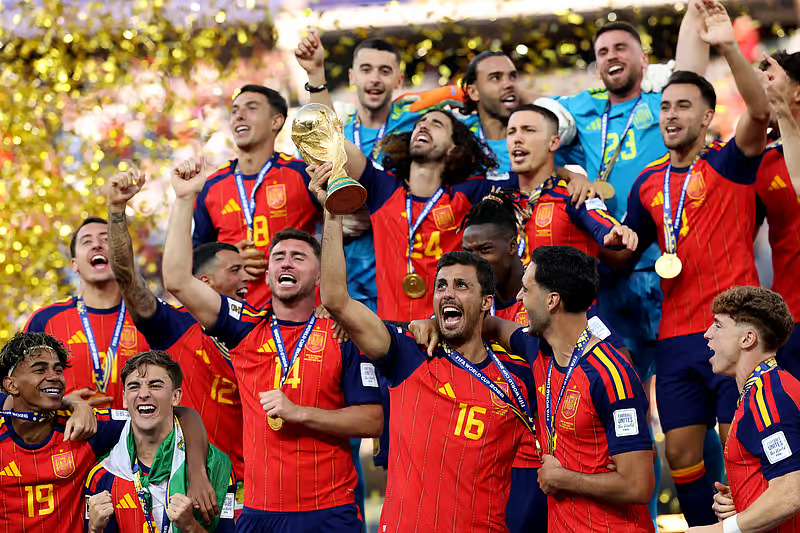
European football’s governing body, UEFA, has warned that it will boycott the FIFA World Cup if FIFA proceeds with plans to allow private investors to acquire stakes in a new commercial entity overseeing its major competitions.
In a strongly worded statement, UEFA said the World Cup “is not for sale” and insisted that football’s governance should never be influenced by private investment.
UEFA Warns of World Cup Boycott
UEFA stated that no UEFA national teams would participate in any FIFA competition if the proposed private investment model moves forward.
The organisation demanded that FIFA completely abandon the proposal and provide binding assurances that football’s governance and competitions will never be opened to private ownership.
According to UEFA, the World Cup is one of football’s greatest sporting legacies and should not be treated as a commercial investment product.
FIFA’s Commercial Subsidiary Proposal
Earlier this week, FIFA announced plans to establish a new commercial company called FIFA Forward Enterprise (FFE) to manage commercial and event-related operations for competitions such as the FIFA World Cup and FIFA Club World Cup.
Under the proposal:
- Private investors could acquire minority stakes in the new company.
- FIFA would retain overall control of football governance and competitions.
- The organisation aims to raise up to $4.2 billion, based on an estimated valuation of $20 billion for FFE.
If approved, FIFA says the initiative would allow each of its 211 member associations to receive a one-time payment of $20 million in early 2027. Funding for the 2027–2030 cycle would also increase from $8 million to $20 million per association.
Infantino Calls It a “Golden Opportunity”
FIFA President Gianni Infantino defended the proposal, describing it as a “golden opportunity to turbocharge the development of the game globally.”
FIFA maintains that the additional funding would strengthen football development programmes worldwide while leaving governance and sporting decisions under FIFA’s control.
UEFA Rejects Commercialisation of Football
UEFA strongly rejected FIFA’s position, arguing that football’s future should not be shaped by investors seeking financial returns.
The organisation said the interests of national associations, leagues, clubs, players and supporters must always take priority over commercial profits.
UEFA also criticised the proposal as a threat to football’s long-term integrity, stating that some aspects of the sport are simply “too important to sell.”
Growing International Opposition
UEFA is not alone in opposing the proposal.
Several major football organisations have raised concerns, including:
- Asian Football Confederation (AFC), which criticised the lack of consultation before the proposal became public.
- CONCACAF, which also questioned the consultation process.
- Confederation of African Football (CAF), which has urged its members to carefully review the proposal.
European football federations and some European Union officials have also expressed concerns about increasing commercialisation and potential conflicts of interest.
UEFA Criticises FIFA’s Leadership
UEFA accused FIFA of developing the proposal without meaningful consultation with member associations.
The organisation described the process as a failure of leadership and argued that national associations were effectively being pressured into accepting an irreversible change to football’s governance.
According to UEFA, decisions of this scale should involve open consultation with all stakeholders responsible for protecting the future of the sport.
What Happens Next?
FIFA’s proposal still requires approval before it can move forward.
With strong opposition from UEFA, AFC, CONCACAF, CAF and several European football bodies, the proposal is expected to face significant debate in the coming months.
If no compromise is reached, UEFA’s threat to boycott future FIFA competitions could create one of the biggest governance disputes in modern football, raising important questions about the balance between commercial investment and the long-term stewardship of the world’s most popular sport.