



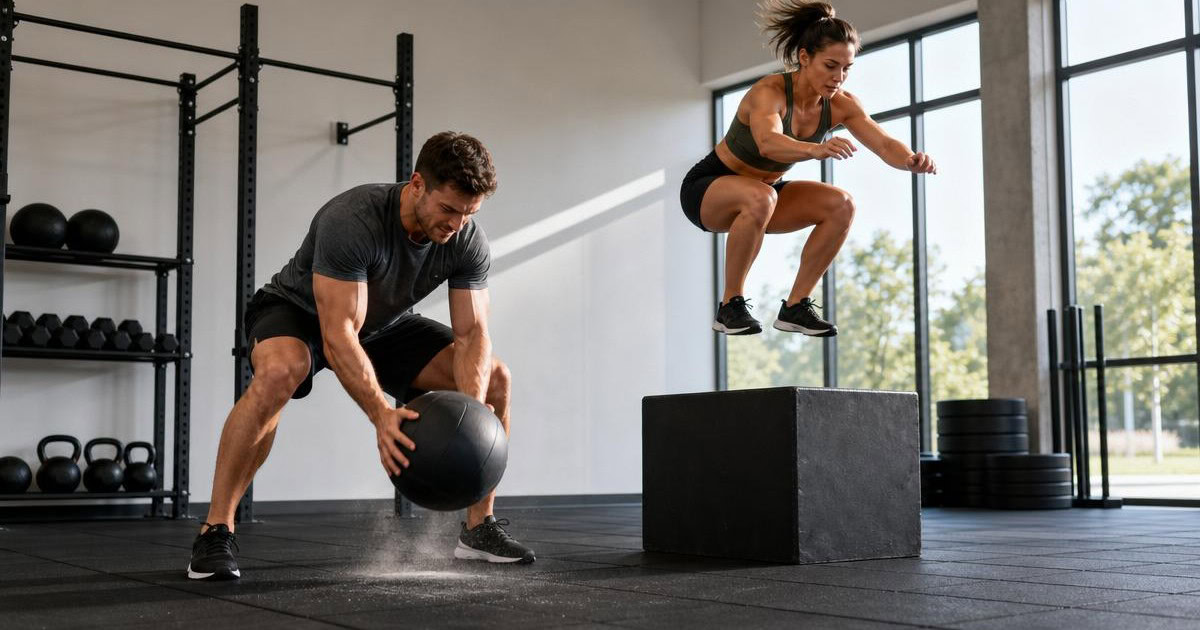
Strength training is an important part of athletic fitness. Whether you’re a footballer, cricketer, tennis player, basketball player, or simply someone who enjoys staying active, stronger muscles can help you move with more control and confidence.
For athletes, strength training isn’t only about building bigger muscles. It’s about developing useful strength that supports movements such as running, jumping, throwing, pushing, and changing direction.
A good routine should train the legs, upper body, and core while also giving the body enough time to recover.
Here are some simple strength exercises athletes can include in their training routine.
Squats
Squats are one of the most useful exercises for developing lower-body strength.
They work the muscles around the legs and hips and can support movements such as running, jumping, and changing direction.
If you’re new to strength training, start with bodyweight squats. Once you become comfortable with the movement, you can gradually add resistance.
The most important thing is to focus on controlled movement and good technique rather than lifting heavy weights immediately.
Lunges
Lunges are another excellent exercise for athletes because they train the legs while also challenging balance and stability.
There are several variations, including forward lunges, reverse lunges, and walking lunges.
Start with bodyweight lunges and concentrate on maintaining control. Additional resistance can be introduced gradually as your strength improves.
Push-Ups
Push-ups are simple, require no gym equipment, and can be performed almost anywhere.
They mainly work the chest, shoulders, arms, and core, making them a useful exercise for developing upper-body strength.
If standard push-ups are difficult at first, you can begin with an easier variation and gradually work towards full repetitions.
Pull-Ups
Pull-ups are useful for building strength in the back and upper body.
Because you have to lift and control your own body weight, they can be challenging for beginners. Assisted pull-ups or other easier variations can help you build the necessary strength before progressing to regular pull-ups.
Planks
A strong core helps athletes stay stable and controlled during many different movements.
Planks are a simple way to strengthen the muscles around the core without requiring any equipment.
Core strength can support activities such as running, jumping, throwing, and changing direction. Try to focus on maintaining a controlled position rather than simply holding the plank for as long as possible.
Glute Bridges
The glutes are involved in many movements that athletes perform every day, including running and jumping.
Glute bridges are an easy exercise for strengthening the glutes and supporting the muscles around the hips and lower body.
They can be performed without equipment and can fit easily into a warm-up or strength-training session.
Calf Raises
Strong calf muscles can be helpful for running, jumping, and quick movements.
Calf raises are simple and can be performed almost anywhere. Beginners can start with bodyweight calf raises and gradually increase the difficulty when the exercise becomes easier.
Build a Balanced Routine
A good strength program shouldn’t focus on just one part of the body.
Try to include exercises that develop:
- Lower-body strength
- Upper-body strength
- Core strength
- Balance
- Stability
- Functional movement
Training different areas can help create a more balanced body and prepare athletes for the variety of movements required in their sport.
Recovery Is Part of Training
Your muscles need time to recover after strength training. Training the same muscle groups hard every day can make recovery more difficult and may affect your performance.
Make sure your routine includes adequate rest, sleep, hydration, and nutrition.
If an exercise causes pain rather than normal training discomfort, stop and consider speaking with a qualified fitness or sports professional.
Progress Slowly
You don’t need heavy weights to start getting stronger.
First, learn the correct technique and become comfortable with each movement. Once you can perform an exercise with good control, you can gradually increase the resistance, repetitions, or difficulty.
Slow and steady progress is generally more useful than trying to make dramatic changes in a short period.
Conclusion
Strength training can help athletes become stronger, more stable, and better prepared for the physical demands of their sport.
Exercises such as squats, lunges, push-ups, pull-ups, planks, glute bridges, and calf raises can provide a solid foundation for a simple training routine.
The key is to focus on good technique, train consistently, progress gradually, and give your body enough time to recover. Building strength is a long-term process, but regular training can help you become a stronger and more capable athlete over time.